

📝 Disclaimer: The content on this site is for informational and entertainment purposes only and does not constitute professional technical advice. Always exercise caution and research thoroughly before modifying game files, installing third-party software, or adjusting hardware settings.
* This post may contain affiliate links. As an Amazon Associate, we earn from qualifying purchases at no extra cost to you.
* This site uses AI technology for content assistance and illustrative imagery. Images are for demonstration purposes and do not depict real people or events.
What Digital Trading Cards Mean in PC Gaming
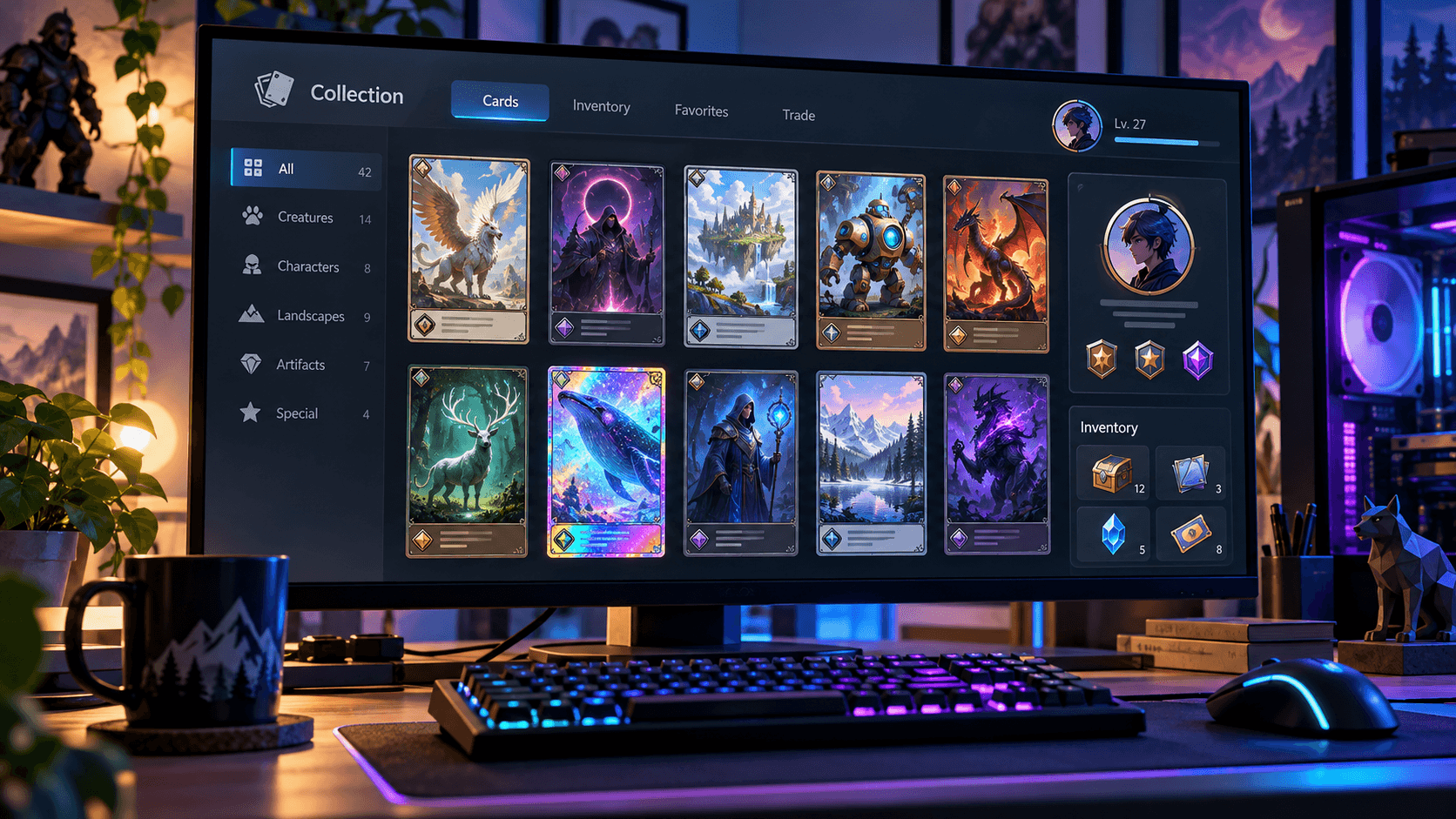
Digital trading cards are collectible virtual items associated with some PC games and platform account systems. They commonly represent characters, scenes, symbols, or other artwork connected to a game. Unlike physical cards, these items exist within a digital inventory and may be displayed through a user profile or community interface.
The cards are generally treated as a platform feature rather than a gameplay mechanic. Their presence does not necessarily change how a game is played, and the exact rules surrounding availability, completion, exchange, or display can differ by platform and title.
How the Feature Appears in Libraries and Profiles
A digital trading card system may be connected to a game’s library entry, achievement area, inventory, or profile page. Platform language can include terms such as card inventory, card set, foil card, badge, or completion status. These labels describe how virtual collectibles are organized rather than providing instructions for obtaining them.
Some systems connect a completed card set with a profile badge or other cosmetic account feature. The resulting badge may appear beside profile information, in community spaces, or within a game launcher interface. These visual elements are separate from ownership of the game itself and may be governed by platform-specific rules.
Common PC Gaming Contexts
Digital trading cards are often discussed alongside profile customization, achievement systems, inventories, and community features. They form part of the broader vocabulary of platform identity, where users can display selected items or account milestones.
The term can also appear in conversations about digital markets or exchanges. Those systems may involve platform policies, eligibility conditions, regional differences, or changing availability. Such details are not universal, so general explanations should avoid treating one platform’s rules as a standard for all PC gaming environments.
A card may have visual, commemorative, or collection-related meaning without representing a gameplay advantage. Its design can reflect a game’s characters, setting, art direction, or promotional identity.
Non-Prescriptive Observations About Digital Trading Cards
- Digital collectible: A virtual item stored through a platform account or game-related inventory.
- Card set: A group of cards associated with one game, theme, or release.
- Foil card: A less-common card variant identified by a special visual treatment in some systems.
- Inventory: An account area that records eligible digital items and their associated metadata.
- Profile badge: A cosmetic profile element that may be connected to a completed set or platform milestone.
- Platform rule: A condition governing how cards are issued, displayed, exchanged, or retained.
- Community feature: A social or account-facing system where collectibles may be visible to other users.
Boundaries of the Term
Digital trading cards should not be confused with physical trading cards, collectible card games, or in-game items that directly affect character abilities. Some games use card imagery as part of their mechanics, while platform trading cards usually function as account-linked collectibles.
The feature is also distinct from achievements, although both may appear in the same profile environment. Achievements record recognized accomplishments or milestones, whereas trading cards are generally categorized as collectible digital assets. Their availability, presentation, and associated features can change over time or differ across PC platforms.